Is the largest country in Central Europe. Denmark bordered it to the north, to the east by Poland and the Czech Republic, to the south by Austria and Switzerland, and to the west by France, Luxembourg, Belgium, and the Netherlands. Germany is a federation of 16 states, roughly corresponding to regions with their own distinct and unique cultures.
Germany is one of the most influential European nations culturally, and one of the world's main economic powers. Known around the world for its precision engineering and high-tech products, visitors equally admired it for its old-world charm and "Gemutlichkeit" (coziness). If you have perceptions of Germany as simply homogeneous, it will surprise you with its many historical regions and local diversity.
Population = 81,799,600 (2010 estimate)
Quick Facts
Capital = Berlin
Government = Federal Republic
Currency = Euro (€)
Area = 357,022km²
water = 8,350km²
land = 348,672km²
Language = German
Electricity = 230V,50Hz (Euro plug, Type F, & Shuko plugs)
Country code = +49
Internet = TLD.de
Time Zone = UTC +1
Emergenciesdial = 112
When to Go?
The "tourist season" runs roughly from May through September. Summer has its advantages: the best weather, snow-free alpine trails, very long days (light until after 21:00), and the busiest schedule of tourist fun.
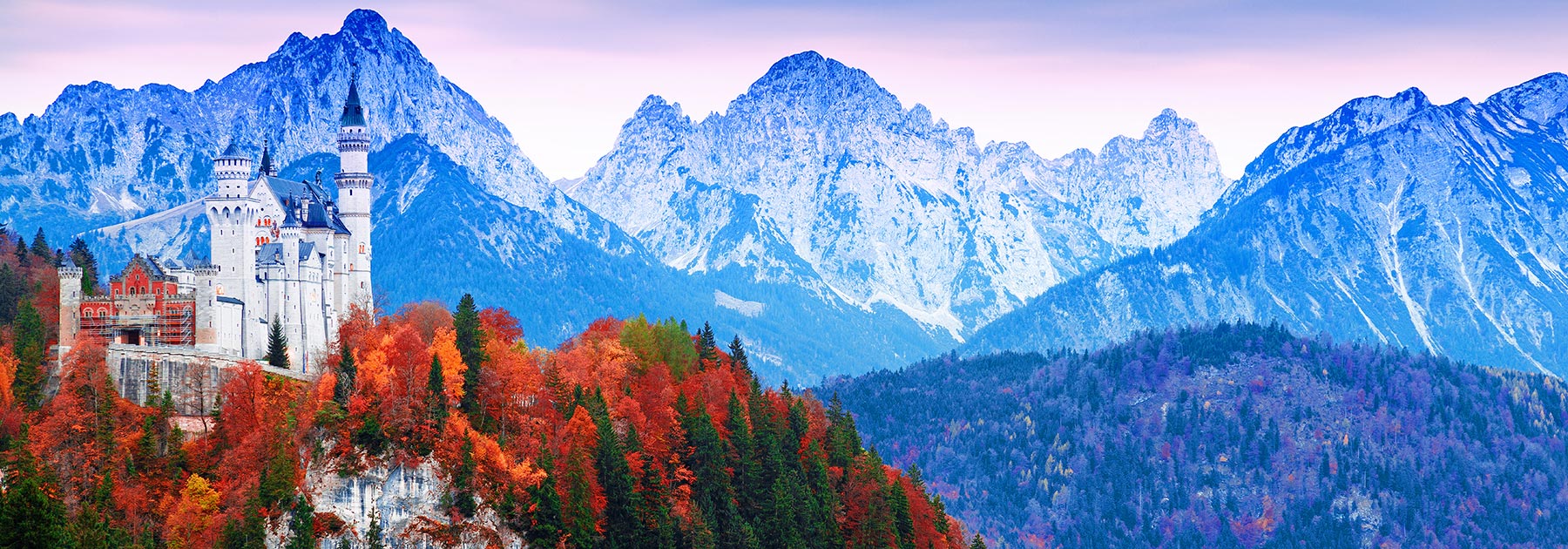
Travel during "shoulder season" (April, May, September, and early October) is easier and can be less expensive. Shoulder-season travelers usually enjoy smaller crowds, decent weather, the full range of sights and tourist fun spots, and the ability to grab a room almost whenever and wherever they like — often at a flexible price. Also, in fall, fun harvest and wine festivals enliven many towns and villages, while forests and vineyards display beautiful fiery colors.
Winter travelers find concert seasons in full swing, with absolutely no crowds, but some accommodations and sights are closed or run on a limited schedule. Confirm your sightseeing plans locally, especially when traveling off-season. The weather can be cold and dreary, and nightfall draws the shades on sightseeing well before dinnertime. But dustings of snow turn German towns and landscapes into a wonderland, and December offers the chance to wander through Germany's famous Christmas markets (this tinseled fun often comes with higher hotel prices, but also longer museum hours).
Winter travelers find concert seasons in full swing, with absolutely no crowds, but some accommodations and sights are closed or run on a limited schedule. Confirm your sightseeing plans locally, especially when traveling off-season. The weather can be cold and dreary, and nightfall draws the shades on sightseeing well before dinnertime. But dustings of snow turn German towns and landscapes into a wonderland, and December offers the chance to wander through Germany's famous Christmas markets (this tinseled fun often comes with higher hotel prices, but also longer museum hours)
GERMANY - | The Federal Republic of Germany | german capital city | meet the germans




No comments:
Post a Comment